All Posts (7457)

Sort by

Cultural diversity is a combination of two complex concepts which make up for an even more complex one. From an anthropological point of view, culture and diversity are intrinsically related, given that culture is a characteristic of human beings and human beings are unique, therefore culturally diverse (Laraia 1986). Nonetheless, since 1970, society has been changing in such a fast pace and in so many ways, that some critical theorists began to wonder what would be the consequences of all these changes (e.g. Hall 1992; Bauman 2005; Giddens 1990). The global market that was seen by many free trade negotiators as the  key to development began to be perceived as a dangerous cultural obliterating process (UNESCO 1999; Álvarez 2005).  

Given the unequal socioeconomic distribution of wealth in the world, the concern of critical theorist is that trade liberalization is disadvantageous for developing countries which cannot protect their markets from the competitive commercial strategies of developing countries (Beltrame 2005). In fact, the validity of this argument lies on the asymmetrical relation amongst countries and the potential of some specific countries to control and manipulate the means of production. What social theorists have been arguing is that local markets and developing countries are not able to compete with the ones from developed countries, and, because capitalist liberalism prerogatives are based on consumerism, the more globalization advances the more societies will have to adapt themselves to the global market rules, leaving behind their local culture, their traditions and their customs (Segovia 2005).   

Since, asymmetry  is a characteristic of contemporary society, this competition for the market share will soon lead to the substitution of the old processes and systems of meanings for the globalized ones, in an mutative adaptation process which will slowly obliterate local culture and tradition or not (Hall 1992). Some theorists have been defending this argument and promoting debates about the damages globalization has caused to society by commodifying culture, goods and services and homogenizing creative processes and cultural values (UNESCO 1999; Álvarez 2005). It is noteworthy that this argument has a strong economical appeal, for it  is focused on the issues of globalization and free trade as the two major dangers to cultural diversity. but it doesn’t give much evidence about how cultural diversity is being obliterated or how society is being homogenized or if this process is actually perceived by society as harmful. 

As mentioned in the first paragraphs, cultural diversity is an intrinsic characteristic of human nature. Therefore, why is “society” concerned that globalization or free trade is going to obliterate cultural diversity? Better yet, what society is worried about it? It is important to understand that critical social theorists often use the term society without  providing a clear definition to which society they are referring to. 

My argument is that societies have different characteristics, sometimes as many characteristics as individuals. Therefore, it is important to indicate the society that is being investigated in order to verify if the assumptions above are true in each context they take place. For this reason, this research proposes to analyze two countries that regard the issue of cultural diversity as a key element of their public policy, that is: Brazil and Canada. 

Both of these countries have taken the issue of the defense of cultural diversity as a major concern of their cultural policy and has demonstrated their concern in the national level as well as the international (Álvarez 2005). Given the cultural diversity of both countries, it will be interesting to examine in which arena the concerns about cultural diversity arises and what part society takes in the construe of the axis of these concerns. As stated before, globalization and free trade is often appointed as the evil cause of the cultural obliterating process. In the case of Brazil and Canada, do these concerns arise because of globalization and free trade or do these societies have other concerns when it comes to protecting cultural diversity?


LITERATURE REVIEW

Globalization is one the most important phenomena of the twentieth century. It refers to those processes that take place in the global scale and pass national boundaries integrating and connecting communities and organizations in new combinations of time-space making the world, reality and experience more interconnected (McGrew, quoted in Hall 1998).  It is part of the socioeconomic evolutionary process started by  mercantilism and followed by capitalism (Giddens 1990). But, since 1970, when the global integration rhythm spiked accelerating the flow and bonds amongst nations. Many concerns have been raised about globalization, including the necessity to protect culture and national identity (UNESCO 2001). 

As observed by Marx and Engels, modernity “is a constant revolutionizing of production, uninterrupted disturbance of all social relations, everlasting uncertainty and agitation (...) All fixed, fast-frozen relationships, with their train of venerable ideas and opinions, are swept away, all new formed ones becomes obsolete before they can ossify (...) All that is solid melts in the air” (1973: 70). This mutative, rapid changing process is most often perceived as the evil machinery behind the cultural obliterating process. As indicated by Giddens “in traditional societies, the past is honored and symbols are valued because they contain and perpetuate the experience of generations” (1990: 37-8). As opposed to modern societies which are, “by definition, societies that are constantly changing, rapidly and permanently” (Hall 1992: 599). 

The intense process of liberalization triggered by international efforts to build commercial frameworks to regulate free trade such as the General Agreement on Trade and Tariffs (GATT 1947) and the Free Trade Agreement  (FTA 1988) brought up many concerns about the consequences of this intense process of world exchange would be, especially in terms of cultural values and national identity (Goldsmith 2005, Thiec 2005; Neil 2005). 

Stuart Hall (1998) points out that we are as post-modern as our world. The changes that occur in society reflects in the individual and vice-versa creating a symbiotic flow.  In this sense, globalization wouldn’t bring much consequences as for the processes of construing cultural values or identities as such, because if it disarticulates stable traditional identities of the past, on the one hand, it also creates new opportunities for new identities to and new subjects in this continuous permanent flow of changes, on the other (Hall 1998). As pointed out by Roland Robertson “globalization leads to increase cultural differentiation, not homogenization” (cited in Mitchell 2000: xiii). For society is not an “unified and well-bounded whole, a totality producing itself through evolutionary change from within itself, like a daffodil from its bulb” (Laclau quoted in Hall 1992: 600).

This can be argued from a cultural point of view, that perceives the dangers of globalization for individuals when construing their identities, languages, symbolic values, national traditions. From a socioeconomic perspective, on the other hand, globalization is perceive as an evil to be defeated especially in terms of cultural industry (Goldsmith 2005). In terms of the production of cultural goods and services, the discussion about the consequences of globalization for cultural diversity is a major concern of countries, such as: Canada, France and Brazil (Álvarez 2005; Thiec 2005; Neil 2005). 

Canada was the first country to retain the right to protect its cultural industries, during the negotiations of the Free Trade Agreement - FTA, in 1987 (Álvarez 2005). A similar approach was introduced by France in the General Agreement on Tariffs and Trade (GATT) negotiations in 1993 (Thiec 2005). Since then, these countries together with UNESCO have promoted many meetings and discussions about the issue of cultural diversity and the necessity to protect it (Álvarez 2005). Clearly, there is a distinction between the discussion about the danger of globalization as an obliterating force of identity and symbolic values, and the danger of globalization for the economic sector called “cultural industries”. 

In relation to the first issue, Stuart Hall points out three possible consequences: “the disintegration of national identities as a result of the growing cultural homogenization process, national identities and other local identities are being reinforced as a resistance movement of this globalization and national identities are in a decline, but new identities - hybrid - are taking its place” (1992: 69). The second issue has a political appeal and it seems to be drawn from economic purposes focused on the production and consumption of cultural goods and services (Thiec 2005; Neil 2005). It seems that the discussions that led to the establishment of the Universal Declaration on Cultural Diversity and the Convention on the Protection and Promotion of the Cultural Diversity Expressions have little to do with the issues concerned by Hall and other critical theories (Goldsmith 2005).


Hall (1994) investigates the impact of globalization on the symbolic perspective in relation to identity and society. His main concern is how individuals are represented in such a mutative globalized world. Goldsmith (2005), Neil (2005), Thiec (2005) and Alvarez (2005) are also concerned about globalization, but from the economic aspect in relation to the impact of free trade for cultural production and consumption. My major concern is about society and what part it plays in it. I take globalization from the citizenship perspective, in which I question if individuals are aware of the rapid changing process Hall talks about and if they act upon this changing process by resisting it or by embracing it. In other words, is cultural diversity a demand from the Brazilian and Canadian societies or is it a political discourse?
Read more…

IDENTITY AND CULTURAL DIVERSITY

As an assessor for international affairs of the Ministry of Culture of Brazil, I became involved in the discussion and elaboration of a pluralistic and transversal agenda for cultural policy, based on the principles of decentralization, cultural diversity and democratic participation. My involvement in this process inspired me to ask questions I have never thought of asking before, for instance: why cultural diversity is so important? why should the government promote a decentralized agenda? why participation should be encouraged? In my ‘naive’ view of the world, there was no need to protect cultural diversity, because, as Laraia has argued human beings are cultural beings, diverse by nature and unique in themselves. However, as I got involved with the governmental agenda for culture in my country, I came to realize I had a narrow view of the issues I was working with. 

For this reason, I decided I needed help in understanding some of these issues and I sought the academic sphere to help me unwind many of the questions I could only begin to ask. My main questions were about cultural diversity and the involvement of society in the formulation of cultural policy. I wanted to understand how society got involved in the discussion of cultural diversity and if cultural diversity was a demand of civil society or a political discourse to justify the interest of certain groups. My curiosity in understanding these issues led me to two sociologists who have been discussing the relations between identity in post-modern society, Stuart Hall (1992) and Zygmunt Bauman (2004). 

Bauman has argued that identity is a fiction “born out of the crisis of belonging” (2004: 20) in the eighteenth century, when modern society went through important changes. In the same vein, Edward Said (2000) points out that the decline of old institutions such as family, religion and dynastic bonds allowed the rise of invented memories as a coherent identity for people who adopted these narratives as symbolic references of belonging. At this point, I started understanding the importance of national identity for the discussion of terms such as identity and cultural diversity. 

Stuart Hall (1992) states that there is no ontological conceptualization for identity. Identity is an unconscious process that starts at birth and continues throughout our life as we try to find our “I” in the “view” of others. Identity exists as something imaginary or fantasized. It lingers incomplete, it is always in “process” of “being formed”. This way, Hall argues that instead of talking of identity, it would be more accurate to talk in terms of identification, and regard it as an ongoing process. As I read the arguments and assumptions of these two sociologists, I started to question the conceptualization of cultural diversity from a different perspective. I understood that I should be asking ‘why’ are we protecting and promoting cultural diversity in a pluralistic, democratic and decentralized way, but ‘who’ is we and why is this issue so important for ‘us’. 

In my search for these answers, I couldn’t find a suitable response on the sociological approach to the issue. The macro analysis of the issues of identity and cultural diversity often draws conclusions based on a ruling elite that establishes discourses and narratives, but it doesn’t explain how these discourses are included in the vernacular creating the divisions between pariahs or outcasts and the citizens or nationals. For this reason, I decided to take the Memory/History and Reconstructions of Identities course in the Anthropology department. From the brief description of the course, I felt most of my questions could be answered from an anthropological perspective. 

For my surprise, this course has taught me more than I expected. Once more, I felt I should revise my questions about identity and cultural diversity. Instead of questioning who is ‘we’, I learned from the literature on memory and identity that I should first ask who am ‘I’ in relation to ‘we’. As I dove into the literature, I began to question the silences and absences in the discourses and the narratives of the ever-changing identity formation process. I realized that I was not interested in discussing identity and cultural diversity as two intrinsically related issues, but that my goal is to find out the missing pieces or the silences in the cultural diversity and identity discourse. 

At first, I thought I should explore the involvement of civil society in the formulation of the cultural diversity discourse and policy as way to show how this process is a top-down strategy of elite groups to promote their interest. But the literature on memory and identity has changed my view of the issue. As I read Radstone (2000), Gupta and Ferguson (1992), Sassen (2008), Sharma (2006) and Said (2000), I realized that ‘identity’ is has become a reified concept in post-modern society with no clear definition; a venue for justifying the domination of certain groups over others. Although I adopt Hall’s definition of a fluid and open-ended process of identification, I also realized I should explore how the issue of identity is included in society today in relation to the nation, especially in terms of citizenship. 

Through citizenship, nation-states legitimize national identity and, as a consequence, their autonomy over its territory and people (Mavroudi 2010). They separate who is the insider and the outsider by controlling the territorial boarders. In other words, the nation-states create the illusion of a natural and essential connection among people, place and culture (Gupta and Ferguson 1992) through which they include or assimilate the desirable peoples and exclude and repressed the unwanted ones.  In this sense, citizenship becomes a venue for legitimizing a discourse of nation-ness or nationality. At the same time, this process also creates silences and marginalization considering that the elaboration of a national discourse is usually based on the narratives of the conqueror and not the the weakest (Mavroudi 2010), the heroes and not the masses (Said 2000).

At this moment, I started to question the discourse of citizenship in the light of cultural diversity, in other words, which people are not considered citizens of a nation and why. I became especially interested in minority groups and their claims for affirmative actions. The most important contributions for me was the work of Said and Sassen. Based on Said’s article on Memory, Invention, Identity, the issue of human social spaces brought to my attention the question of pre-colonial civilizations and their dimly recognized role in the discourse of national identity, especially their claims and demands for recognition and human rights. This brings me to Sassen’s discussion about the emergence of centrifugal multiplication of particular/specialized assemblages of Territorial, Authority and Rights (TAR) that unsettles the existing normative arrangements and produces a new type of segmentation in the state apparatus. 

Sassen contends that there has been a proliferation of new normative orders which was once ruled by the state and the dominant logic of centripetal unifying normative framing. However she argues that these new normative frames can coexist with older orderings, but they bring consequences that may be strategic of the larger normative questions. She does not dismiss the role of the state as an normative body, but she argues that these assemblages are unsettling the older national frameworks in an complex and illegible way.

Sassen’s approach is particularly interesting when analyzing the issue of national identity, specially if we consider that the changes that occur in society reflects in the individual and vice-versa creating a symbiotic flow (Hall 1992). If the changes in modern society created national identity as a substitute for traditional institutions as argued by Said (2000) and Bauman (2004); the changes suggested by Sassen will also have an impact at the individual level. My intent is to look at the discourses of affirmative action of contemporary society in relation to cultural diversity to see what is being registered as memory and what is being silenced. 


REFERENCES

Bauman, Z. 2004. Identity. Cambridge; Malden, MA: Polity.

Gupta, Akhil and James Ferguson. 1992. "Beyond "Culture": Space, Identity, and the Politics of Difference." Cultural Anthropology 7(1):pp. 6-23.

Hall, Stuart. 1992. A identidade cultural na pós-modernidade; tradução Tomaz Tadeu da Silva e Guacira Lopes Louro: Rio de Janeiro: DP&A.

Laraia, Roque de Barros. 1986. Cultura: Um conceito antropologico. Ed.14. Rio de Janeiro. BR: Jorge Zahar. 

Mavroudi, E. 2010. "Nationalism, the Nation and Migration: Searching for Purity and Diversity." Space and Polity 14(3):219-233.

Radstone, S. (ed.) 2000. Memory and Methodology, Oxford: Berg. Read “Working with Memory: an Introduction”, pp. 1-21 

Said, E. 2000. “Invention, Memory and Place.” Critical Inquiry 26 (2): 175-92.

Sassen, S. 2008. “Neither global nor national: novel assemblages of territory, authority and rights.” Ethics & Global Politics 1 (1-2): 61-79.

------. 2006. Territory, Authority, Rights : From Medieval to Global Assemblages. Princeton, N.J.: Princeton University Press.

Sharma, A. 2006. "Introduction: Rethinking Theories of the State in an Age of Globalization" in Aradhana Sharma & Akhil Gupta. 2006. The Anthropology of the State: A Reader. Ed. Malden, MA: Blackwell Publishing.

Read more…

a boy

he is waiting
at the edge of my bed
this little boy
holding a broken guitar
he constructed
himself
a song to play
he looks at me inquisitively
with those bright eyes
and asks me
"would you like me to play you a song?"
"yes, please!" i respond
he starts to play
hands fumbling over strings
tiny fingers grasping at thin air
weaving sounds together
he pulls out the notes
humms along with a melody
my mind wanders
far far away
getting lost in the sound
then
when he is finished
i ask him "why have you stopped!?"
he says to me
"you're tired, now, go to sleep
i will play you a new song
tomorrow"
i close my eyes
and wait
he meets with me there
the little boy
in the out-grown
red tracksuit
he sings me to sleep
and laughs with me
there
in dreams
the next night
i await his
return

Read more…

"Creep"

Creep

january 4th 1986 is my birthday. when i turned 19 years old, i was in south korea. i went with my father, and his wife darcy to a private kareoki bar to 'celebrate'.

the one birthday i will never forget...19 years old...south korea...
singing: "i'm a creep, i'm a weirdo, what the HELL am i doin' here, i don't belong here
i don't belong here"...

i had been really excited to get to know my father better. had saved up my teaching money from working in beijing to take a visit for two weeks to see them. after this experience, i didn't care to know my father anymore.
the argument my father and i had gotten into was over music. i had sang only two songs at the kareoki bar, the first had been "hero" by mirriah carrey, he had no problem with that song, haha....

and the second song...was "creep" by radiohead...i did not think much of the choice of song, i just sang it because it was one i knew, was simple enough to follow, and really...is one of the funniest songs i've ever heard!... and singing it for kareoki, to me, was a bit of a joke. in the sense that i'm talking about myself as a creep and a weirdo...which i am. i accepted this part of myself way back in elementry school, and to me the lyrics are a joke at myself. having the ability to laugh at myself has helped me get through hard times. and really, who has not felt out of place in this world in certain moments in life? in that sense, i think most people love this song, because almost EVERYONE can relate with the feeling of not being good enough, for some thing, or some one. the truth is...i was singing this at my father. i had always felt i was not good enough for him...for his love and acceptance of me. this time proved...once and for all...that i had been right...

singing this song had made him really...really angry with me!
after the song was finished i was beaming! smiling ear to ear, proud of myself for how well i had sung it. thinking my dad would be laughing with me but instead his face was stern and he gave me a look that made me feel ...

"oh, god, this was a bad idea, stupid, stupid, idea"...

my dad said very calmly, but very firmly, at first...

"that song is evil. this music is garbage! how can you even sing such words as that?! do you know that those words will go into your head and make you believe it one day! you have to understand the effect music can have on you!.'

i held back a laugh, meanwhile, my eyes were, just, buldging out of my head in disbelief!!!

"here we go..." i thought. "i should have known...better."

my dad had given my sister the same lecture about music when he had found out that she listened to Nirvana. he broke her CD's while yelling at her...skaking, like he does when really angry..boiling over, face red...

"this shit should be burned, it's from the DEVIL!!!!"

i remember him saying this to her. the image of his angry face seared into my memory.

my sister, no less than i, had been crying.... i never understood this, at the time, i had been way too young to understand why any of this had been a big deal at all!

"it's just music!!" i had thought...

but maybe age doesn't matter and a lot of the things that didn't make sense to me as a child, still don't make sense to me, now, as an 'adult'....

on a side note, i remember the day that kurt cobain died, i walked into my sister's bedroom and she was crying more than i had ever seen her cry before. wailing! it was like her heart had been ripped into two pieces...i had asked her what was wrong!! she replied through sobbs

"kurt cobain died today!, he's DEAD, he's DEAD, oh my god, he's dead..you can't understand!"...she said.

my sister loved him so much...poor girl.
i was way too young at the time to understand the significance of this news. to me he was just some other rock star... i had only heard a couple of the songs, 'teen spirit', in particular... which i liked, how could i not?!! such a catchy tune and a soulful voice...of...of understanding... also, i had liked everything my sister did. i wanted to be her. and this news... it broke her heart and so it broke my heart just watching her cry. in that moment i wished i could understand her better, wished that i could feel the same way about his death, but i only cared because she had. it was only later on in life...that i really understood...what she saw in him...why she cried so.

"how could she have loved some one so much, that she never, even, knew, in real life!?"

.... i had wondered at this back then...but, now, i know what she must have felt
...because my heart will break when Thom Yorke dies.


but, back to where i was at...my dad yelling at me, cramming bullshit dogma down my throat....
my father was going into this lecture, the same old, of how music and lyrics are important, and he was saying that if i listen to music like this...it will affect me on a spiritual level. he simply did not understand what the song meant to me...he simply did not understand how much sarcasm there was, for me, in those words "i'm a creep, i'm a weirdo!" he went into a rant about how he knows his children think that he is a weirdo, but the truth is, he said,
'MY CHILDREN ARE THE WEIRDO'S"...

"well thanks'...i thought to myself..."you just contradicted everything you were just saying, dad!"

i started trying to explain to him my point of view... agreeing with him to a certain extent...that i understand music does have some effect on us psycologically and even, maybe spiritually. . .but that...lost for words...because...he simply didn't...couldn't understand...didn't even get to complete one full thought with him without being interrupted....

trying to explain this to an 'old-school-evangelical-bible-thumping-hick' is impossible...his...mind already closed, already decided... simply....impossible...i realized all too late. after about an hour of arguing in the kareoki...i was broken down by him. word by word. he lashed out at me. most of which i forget. something just slowly closed down inside me and past a certain point i just blocked what he was saying to me "out"...my mind deleted it as if it were information into a computer that has no value, no service...to the higher understanding of the program. my mind simply said "delete, erase"...and the brain slipping into autopilot, survival mode.

... but i remember this part very clearly...he had said...

"you better SHUT UP or i will give you something to cry about!!"

my father yelled this at me as we walked away from the bar, back to his apartment. i knew that he meant to slap me. give me a nice good old fashioned wake up call. i had been sobbing uncontrolably. could hardly breathe. my first panic attack, ever. after he said this to me, i shut up, right away. was silent for the rest of the walk back to his place. darcy was silent too. she knew, maybe better than i did, that it's never a good idea to talk back to some body like my father. i stopped crying, took a deep breath, and i remember breathing in and breathing out...focusing, really focusing in on my breathing...and...trying to calm myself down from my hyperventalation...thinking to myself,

"i don't want to know you, anymore...dad"...and after that thought...i could breathe, again.

but i would never say that out loud, knowing what the concequenses would have been for back-talking.
...something died inside my heart that night. my father killed something in me, saying what he said. given, he had been a bit drunk, and my father was always prone to saying stupid things when he was drunk...and doing even more stupid things.... i took this into account...but no matter how much i tried to mentally justify his emotional outburst at me, it did not stop my heart from closing towards him. i turned into stone. from that moment on, i looked through my father, like i was looking at a wall that i had, in that moment, very deliberately built and that wall is still there to this day. i do not think i will ever break it down; it's higher than the great wall of china and i know that he will never try to break it down, either. it's too high, it's too old, and it's too strong..

i thought to myself...

"my father will never know me"...

i was just waiting for him to pull out the bible when we got back...start thumping on the words of god. he would do this, in a way, as if he thought he could be able to drill it through my head. sure enough, that was the first thing he did after our walk back to his place. but what he didn't realize is that, i was no longer listening to him any more...after he said what he said to me...i closed completely. i saw his lips move, but no words came out....i stared into my father's face blankly; hollow, empty, and cold.

he didn't even notice that i was no longer there with him...i was far far away...in my heart and in my mind i was miles away from his world, and he would never know mine.

i got the closure i needed from that last visit. never went out of my way for him again. i understood better my mother and what her trials must have been with him...what must have turned her into...how she became... found a greater understanding, a greater forgiveness into her mistakes with us children.
i realized in that moment, that my dad had really broken her... like a wild horse, he broke her spirit. i decided that night that my father would never break me. i'm too strong and i'm too free. i'm more of a horse than i am human. no one can break me. i am wild, forever,

he could never break me, like he did my mom... i would never let him close enough to do that to me.

i forgive my father, because i realize that it's his loss, not mine. i forgive my father because...in his own way he is really quite innocent in his ignorance and narrow minded stupidity. i forgive my father because i realized a long time ago that hate is a waste of time...and bitterness ends up eating you alive.
that night before i went to sleep, i whispered to myself a prayer for m y dad

"forgive him father, for he knows not what he does..."

Read more…

the power of one

rain-drops
on
roses
broken jaw
whenever she
smiles
i feel the pain
that blow to the
face
pierces my heart
she took the
blows
for
me
...for 'us
children'...
she did it for
love

for-
ever
self sacrifice
a seed in the womb
grows
to

behold
the flower
i look into those
eyes
so
full of grace
i forget all hate
remember, only,
innocence, again...
a crooked smile
on the face of a
child
forgiveness
broken and
complete
the
courage
to have joy...
my mother
she
is
she
is
a

mystery to

me
i
wonder
how can she smile
with such sadness?
my mother
she
is
'Maria Von
Trap'
for
me
the
sound

of music
will always fill
that smile.
that sweet
song

fur

elise
Beethoven
she plays black and
white keys as 
words
she

will never

speak.
late
at night
almost asleep
i listened to her speak
and now she has
forgotten
the
song
i once knew
my
mother
my
mother
my
mother
is
fading
fading
fading
away
i cry out to her
from
...afar...
'fly little bird
...fly...
go to the hills
go to the hills
go to the hills
and
sing your song!..
you
haven't done
'nothing wrong ! '
mother.

Read more…

A Scanner Darkly

I just watched the movie A Scanner Darkly and it was AWESOME I didn't know Radiohead made the soundtrack, I just realized those sound effects and then the ending scene it was Thom's voice, on the song Black Swan. Have you guys watched it?

Read more…

Chapter Four.


It is the first day of Seventh grade and I am nervous.  I spent all night preparing my outfit.  I am wearing a light pink t-shirt with princess in rhinestones across the heart and sparkly silver jeans.  I called my friend Danielle and in all excitement described the outfit.  When I see her at school she asks me why my outfits always sound better on the phone.  Second period is Math and I have a picture of Elijah Wood in my folder.  I have a crush on Elijah Wood, I love him in Lord of the Rings.  I have never read the books but I am sure he portrays Frodo perfectly.  Joya is assigned to the seat next to me and she opens her folder and there is a picture of Elijah Wood.  We instantly begin to like each other.


It’s my birthday and my mother says that I can have a sleepover.  I don’t know who I will invite, I don’t have any close friends.  I decide to invite Erika, Joya, and Ashley.  I know Erika and Joya from the playground.  I know Ashley from choir.  I spend the day cleaning the basement so that it will be perfect for when the girls get here.  There is an area in our basement that even though our basement is pure cement, there is carpeting and couches and a television.  My old Nintendo is down here too.  I play Super Mario Brothers and Duck Hunt.  My guests arrive and we all start off upstairs.  Joya gives me a lot of Lip Smuckers, a ten pack, and Erika gives me a diary.  Ashley gives me a Barbie.  It is a veterinarian Barbie with a cat and a dog.  We all head downstairs for the night after we have all had cake and we start to gossip.  We all get into our sleeping bags and my cat Greyson comes down the stairs.


Greyson likes to crawl under the covers with me and he crawls into my sleeping bag, I don’t think much of it and even brag about how much he loves me.  The other girls are appalled that I let him sleep with me and I feel ashamed.  We all go to sleep.


At school on Monday Erika and Joya taunt me endlessly about Greyson.  I feel like my birthday was a disaster.  I had wanted them to think I was cool but they just think I’m a cat fucker.  Joya even puts notes in my locker, she slips them in through the grate at the top and when I open it, they are waiting for me.  “Catfucker”.  They taunt me all day in the hallway.  I try to ignore them but all I can do is listen.  I don’t mind.  I just want to be their friend.

Read more…

Paradiso.

Paradiso.


In our faerieland where Bumbles have no teeth

The cigarettes grew from bushes

And the lemonade is always sweet.


You and I would walk along a row of birch trees

And kiss in the shadows of an old oak tree.


You would ask how I was but I wouldn’t need reply

For the shine in my smile and the scream in my eye.


Gamble with me and say “I knew thee well.”

For a person could be happy skating on the jaws of hell.

Read more…

Boogah (dog poem).

Boogah.


The little boogah waits in the backseat.

“Bark, bark,” and we leave him there with the windows partially down.

Shopping with my grandmother

Amish potato salad and raspberry filled donuts

I buy, she works too hard

Elbow in elbow we walk out the door

And our hearts blossom in the dew of the afternoon

And I think, “All I am I owe to you.”

Read more…

SEVENTY-TWO

it ain't no use to sit and wonder why
it don't matter, anyhow
and it ain't no use to sit and wonder why
if you don't know by now
when your rooster crows at the breaks of dawn
look out your window and I'll be gone
you're the reason I'm traveling on
if i’m not there now physically
i’m always before you
come what may

it ain't no use in turning on your light
that light I never knowed
and it ain't no use in turning on your light
i'm on the dark side of the road
but I wish there was somethin' you would do or say
to try and make me change my mind and stay
just give me more time I hope and pray
i mistake all you say
the seeds of the dandelion you blow away

it ain't no use in calling out my name
like you never done before
it ain't no use in calling out my name
i can't hear you any more
i'm a-thinking and a-wond'rin' walking down the road
i once loved a woman, a child I'm told
i give her my heart but she wanted my soul
you got me into this mess so
you get me out

so long honey 
where I'm bound, I can't tell
goodbye's too good a word 
so I'll just say fare thee well
i ain't saying you treated me unkind
you could have done better but I don't mind
who else do you kiss
with those lips, with those lips
gone with a touch of your hand
 
If i knew now
what i knew then
these are the rules, these are the rules
and they are cruel


Read more…

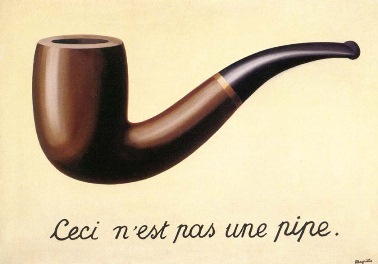
Ceci n'est pas une pipe.

File:MagrittePipe.jpgThis is a painting by a Belgian artist René Magritte intitled The Treason of Images. I first saw this in high school, a copy hanging off the wall in our philosophy class. I thought it was nicely painted but had no idea what it said underneath. So I asked a girl in my class who spoke French to translate it for me and she said it read: This is not a pipe.

My first reaction to this at 15 was quite teenager-ish, I thought it was pure nonsense. I saw it as something irrelevant, shallow and pointless. Today when I see 14 and 15 year old teenagers react the same way, at first I feel like "How can they not see it?!" but then I remember back to my first reaction and understand...some things you just can't grasp that early on.

I was very into video games a few years back, especially into the GTA series. Not really because of the violence, I wasn't particularly into that, I was the one driving around as carefully as possible, what interested me was the story line, which, despite the abundance of violence, blood and killings, was there and was interesting. Nothing in it happened without a reason. 

I was playing it and the idea slowly seeped inside of me. In the game everything is set up for you, the individual, the player to explore. Everything is a projection, from the oceans, cities and buildings, down to every "person" in the video game which is supposed to give the impression of a busy city and everyday people. It's all a projection, all a calculated program to push you through its story line which you have to finish. It works like that in every video game, also in almost all of the books.

And this was food for thought. What if this translates into our every day reality, what if we are inside some sort of a program, a projection of things to influence us into a certain direction. The question immediately posses, who is the programmer? Is there something which directs us? Or is it a sort of free simulation, a one in which we all decide our future outcome...  

At first this lead me into a much more extreme direction. I first started contemplating that, maybe only I am real and everyone and everything else is this projection, like the video game. So this would mean, from my point of view, that I am posting a blog for the projections to read it, but from your point of view it would mean that a projection from your own "simulated" world is writing about being a projection for you to realize that you're the only one who is real.

I explored that idea for a while, in a sense still do, but it has changed since then a bit. I don't view myself as the only real thing in the universe anymore (which was an extremely selfish view, looking back at it), but I see everyone as real, the only difference is that we are both...for ourselves we are real, for everyone else we are projections. 

In my head it works sort of like this. When you meet someone, you meet this projection and the same thing is happening vice versa. Real person meeting someone who is also real, but they both see each other as projections. You enter a world of someone else, you can look inside it, you can see it, hear it, smell it and feel it, but you will never fully understand it. Like a glitch in the program, it will never allow you to fully comprehend someone elses reality because it could distort or even shut down your own. Just imagine what could happen if we could completely and fully fall inside someones world, not only view it and observe it, but completely correlate to it...wouldn't our own reality disappear?

Here steps in Magritte's painting back in new light. So the pipe really isn't a pipe. It looks like it, but it's only a 2D projections of the element manufactured in our world. The picture we see might look real, but it isn't. And here comes a dark twist to the whole simulation.

If it truly is that, only a simulation, then there is nothing  wrong for you to kill a certain projection. You won't feel the pain of  the fatal wound, and you can assume from this theory that the projection won't feel it either (just like in the video game). But our own program decided to ensure this wouldn't happen (as often), so it fitted us with a command inside (most) of us that we call empathy. The ability to relate to other "projections" and what they might be feeling, although we can never truly know what that may be or even if they are feeling anything at all! 

We trust our own experiences and we assume what someone else might be feeling in a certain situation. So that keeps us from killing everyone we dislike and prevents us, as a species, to evaporate. Again, imagine the world or our society in which there is no empathy...would we even be here right now? We would probably kill ourselves somewhere early on in our evolution...probably.

In this theory something else intrigued me quite a bit...everyone's experienced coincidences which are hard to dismiss as mere happenstance, which our logical minds find difficult to explain, and we all search from where these coincidences came...some find it in religion, others find magical energies floating in the universe and some say it's as simple as a coincidence,  nothing more than that.

My head was fucked a few times by these strange occurrences and I've always left them as just simple coincidence, I tried rationalizing them but I never managed to write them off. I left them in my sub conscious to float until something reasonable comes along and explains them away. But I also started imagining,...if this world is just a simulation for each individual, how do coincidences fit in?

Like a story-line which you are following, it pushes you back or forward into a certain direction you may or may not like. That brought a question...so, there are stories we follow? We don't have free will?  The "program" decided this was our tale and we must walk on its path no matter what? 

I explain it by the power of our sub conscious brains. We constantly give ourselves goals to achieve, sometimes without us knowing. The sub conscious observes and absorbs everything around us, all the projections... the ones it likes, it puts as a standard for us. So we constantly feel our own reality could be improved and should be, because of what we see around us. We try relating to the projection, to feel more a part of it, to look like another projection, be noninvasive, regular. 

Sometimes the goals are more noble, trying to be a better person, being more giving, but it's never altruistic, it's never really to help other people, other "projections", it's also selfish, also egoistic, because we all know the feeling of giving, helping, it feels great. So it's again by our own reality that we are govern to be good or bad to the simulation around us.

But, of course, none of our goals or wishes prepare us for the bad coincidences. No one wishes to be hit by a bus or to be diagnosed with a disease, but then the question is, how does this fit into the theory? It doesn't, unless...unless the program doesn't work for each individual but for a planet or universe as a whole.

This all sounds very religious or religion based, but I must say I've never studied any of the religious texts, I only know the basics of the major religions and that's it. But if you imagine the universe as a computer program...it constantly changes and evolves, it upgrades on permanent basis. It gets rid of some projections and creates others...Getting rid of the viruses and objects which could destroy its existence and promoting the existence of those who contribute to the upgrade.

But to the matter at hand, we've gone too far off. The idea I had (which I know is not original at all) is that it may all be govern, like a machine, an artificial machine which looks real to us. We see the pipe, we know it is a pipe, but it may be not. Just a simulation, a projection. A visible element for us to grasp and push us in a certain direction.

Do we decide that direction? I believe we do. Here I believe the philosophy of deism, which states that god created the universe but then left it to evolve on its own. We may be put here by a "program", but I believe that it is us and only us who can determine the path on which we walk. If we set our goals and do all we can to achieve them, the coincidences will follow them. Nothing good comes easy, so the bad coincidences will come, but it is us who decide whether we continue on that path or walk away from it.

We may be a part of a program, but we are programs ourselves. The entire universe or "simulation" is also inside of us, too complicated for us to grasp. Here I'll close with a statement by the comedian Bill Hicks: 

“The world is like a ride in an amusement park. And when you choose to go on it you think it's real because that's how powerful our minds are. And the ride goes up and down and round and round. It has thrills and chills and it's very brightly colored and it's very loud and it's fun, for a while. Some people have been on the ride for a long time and they begin to question: "Is this real, or is this just a ride?" And other people have remembered, and they come back to us, they say, "Hey, don't worry, don't be afraid, ever, because this is just a ride.”

Read more…

Tributo a Radiohead en Palermo Hollywood.

Amnesiac Radiohead Retrospectiva se presenta en Liverpool Bar Palermo Hollywood por primera vez! Es el primer show del año en el cual festejaremos los 20 años del disco Pablo Honey tocando algunas canciones del disco primogénito de Radiohead además de los hits más emblemáticos.

Hay merchandising exclusivo de Amnesiacrr para los primeros 50 en ingresar y las entradas se adquieren el mismo día del show en la puerta de Liverpool a partir de las 21hs. Las mismas tiene un valor de $30.

La dirección es Arevalo 1376.

Este es el link del evento en Facebook: Amnesiacrr Live@Liverpool Bar

Youtube Oficial

Facebook

Twitter

Soundcloud

Myspace

Los esperamos a disfrutar del primer show del año!!!

11010980901?profile=original

Read more…

Shitty Poems

As an editor for my school's literary magazine, I get exposed to writing of every caliber and I'm still surprised by the amount of awful poems I have to read each week when it comes time to critique (tear apart).  Every new batch of works is a not-so-cleverly wrapped pair of sweatpants on christmas morning and I'm a six year old who has worked exceptionally hard to be good that year.  One would think that by now I would have an impenetrable shell, shielding me from the effects of deplorable poems and that I could just slay them with the almighty red pen of justice and move on.  But I haven't.  It's genuinely bad for the soul to read a rotten poem and I need a doctor.

I'd have to say the most common offense is the belief that the first draft is the right one.  Many of these poems reek of infancy and with that comes a monsoon of other issues.  These include but are not limited to: a mystery fetish, clunky and awkward rhymes, and a sickening affection for nature similes.  

They never seem to have a good ending either.

Read more…

Blog Topics by Tags

Monthly Archives